Not every damaged driveway needs a full replacement. Learn the key differences between a new installation and resurfacing — and how to choose what's right for your property.
One of the most common questions we get is whether a driveway needs full replacement or if resurfacing will do the job. The honest answer depends on the condition of what's already there.
Resurfacing (overlay)
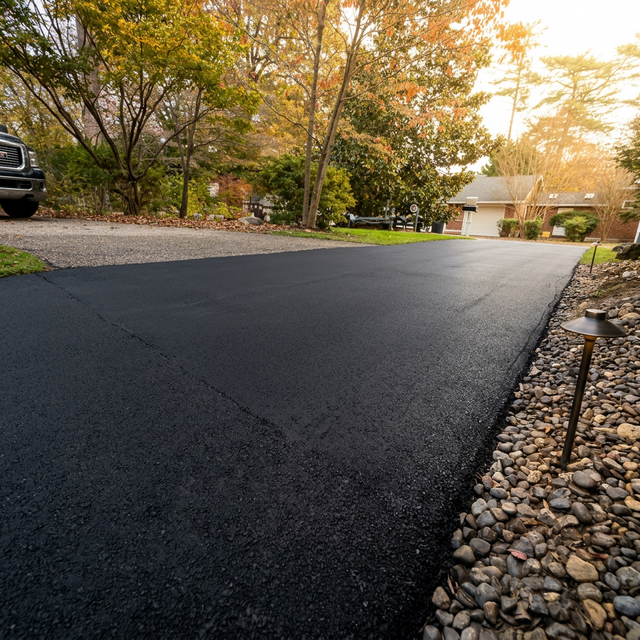
Resurfacing means we grind down or pave over the existing asphalt with a fresh layer — usually 1.5 to 2 inches thick. It works well if the base is still solid. If your driveway has surface cracks, minor potholes, or is just rough and faded, resurfacing is usually the right call. It's faster and costs significantly less than a full tear-out.
Full replacement
If the base layer (the gravel/stone foundation under the asphalt) has failed, resurfacing is a temporary fix at best. Signs of base failure include large alligator cracking (that web-like pattern), areas that sink or flex when you drive over them, and drainage problems that don't go away.
How we assess it
We'll probe the existing asphalt, check for soft spots, and look at drainage patterns before recommending anything. We'd rather give you an honest assessment upfront than do a resurfacing job that fails in two years.
The cost difference
Resurfacing typically runs 40–60% less than a full replacement. For most driveways in decent structural shape, it's the smart, cost-effective option. For driveways with serious base issues, replacement is the only real fix — and doing it right saves you money long-term.
Ready to get started?
Free estimates — same-day response. Call or fill out the form online.