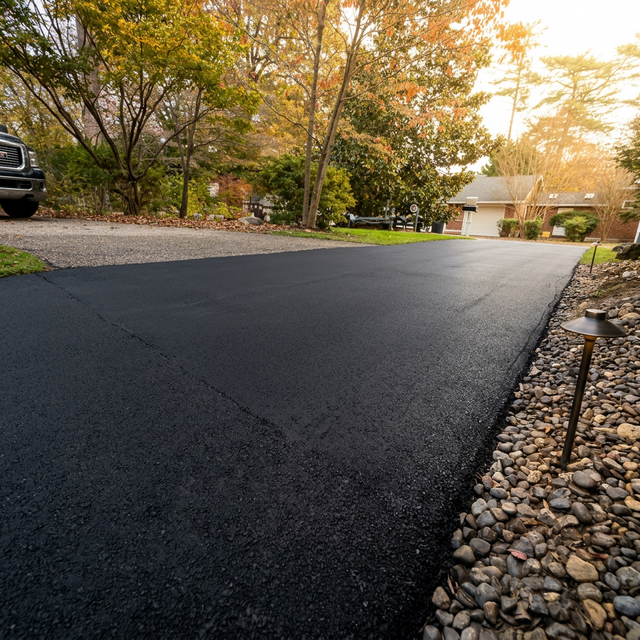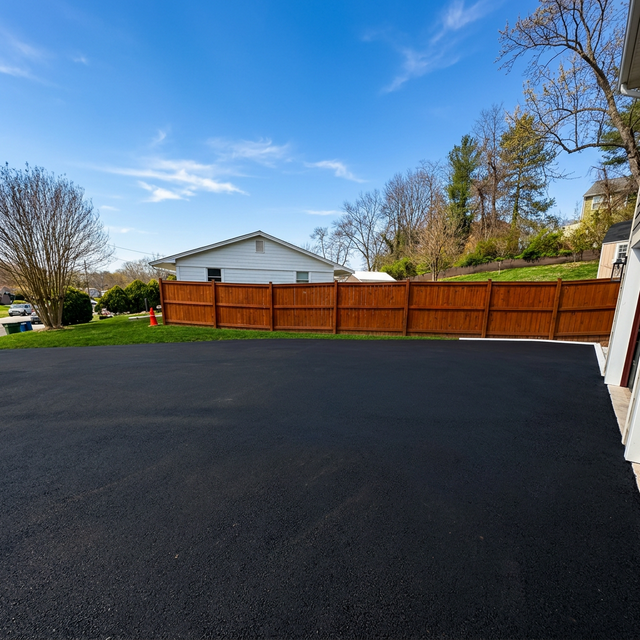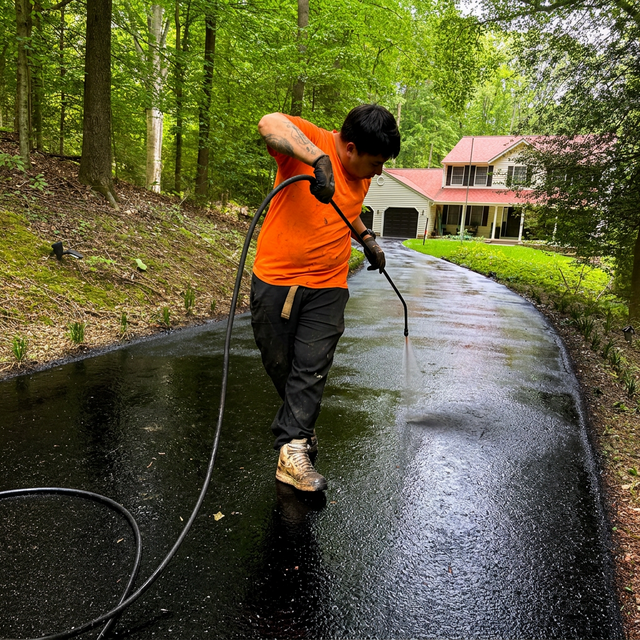
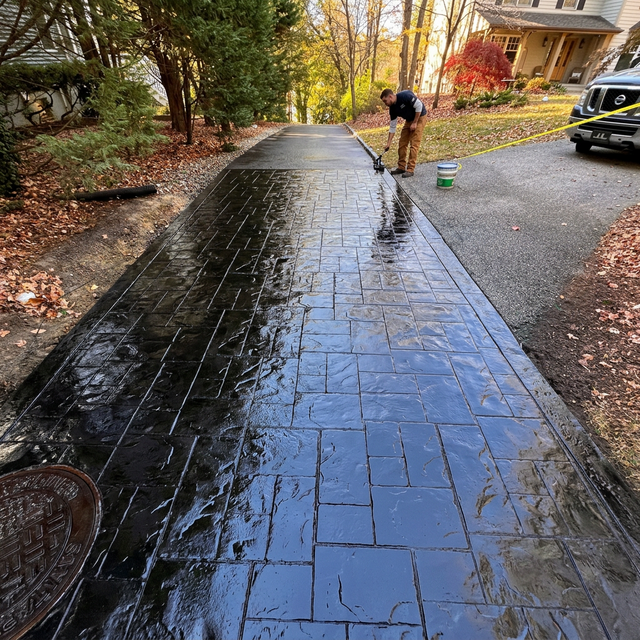
Sealcoating is one of the most cost-effective ways to extend your asphalt's life. But timing matters. Here's when to do it — and what happens if you wait too long.
Sealcoating is like sunscreen for your driveway. Once asphalt is laid and cured, it starts to oxidize — the sun dries out the oils in the mix, causing it to shrink, crack, and fade. Sealcoating slows all of that down significantly.
The right timing
New asphalt should cure for at least 6–12 months before first sealcoat. After that, plan on sealing every 2–3 years depending on traffic, sun exposure, and how well you maintain it. Maryland summers are tough on asphalt — UV and heat accelerate oxidation fast.
Signs it's time
If your driveway has gone gray (instead of black), has minor surface cracks, or feels brittle underfoot, it's time. You don't want to wait until cracks are wide enough to let water in — that's when freeze-thaw cycles turn small cracks into big potholes.
What happens if you wait?
Water gets into the cracks, freezes in winter, expands, and breaks the asphalt from the inside. What started as a $300 sealcoat job turns into a $3,000 patching or repaving job. We see it every spring — driveways that could've been saved for a couple hundred dollars.
What we recommend
Sealcoat in late spring or early fall when temperatures are consistently above 55°F. Avoid sealing right before heavy rain — sealant needs 24–48 hours to cure. If you're not sure whether your driveway needs it, give us a call. We'll take a look and give you an honest answer — no pressure.
Ready to get started?
Free estimates — same-day response. Call or fill out the form online.